


The chancellor, Rachel Reeves, used her 2025 Autumn Budget to raise £22 billion of tax. While the headline rates of Income Tax and National Insurance remained untouched, you might already have read about the three Budget tax rises on income that could increase your tax bill next year.
Elsewhere, though, some less obvious announcements could also see your tax liability rise.
Reeves confirmed she would “maintain all Income Tax thresholds at their current level for three further years from 2028”, extending a current freeze on the Personal Allowance to 2031. A similar freeze on Inheritance Tax (IHT) thresholds was also extended to 2031.
These “stealth taxes” increase government revenue as rising costs, wages, and investment growth push up bills and drag more Brits into higher tax brackets.
They could see your bill rise over the next six years, so keep reading to find out more.
Fiscal drag occurs when inflation and wage growth meet frozen thresholds and allowances, forcing you to pay more tax
You pay tax above certain thresholds on the income you earn and the estate you leave behind on death.
These thresholds generally increase over time – due to inflation and other factors like wage and investment growth – broadly in line with the rising cost of living. In recent years, however, this hasn’t been the case.
As the cost of living rises, more and more people breach these frozen thresholds. This can result in people paying tax for the first time or being pushed into higher brackets and becoming liable to a higher rate.
This is known as fiscal drag and – following the chancellor’s Autumn Budget – it is set to continue until at least 2031.
1. Income Tax threshold freezes will raise billions over the coming years
The Personal Allowance is the amount you can earn before Income Tax becomes payable.
Rishi Sunak froze the allowance in his 2021 Spring Budget, and the freeze was intended to last until 2026. It has since been extended by consecutive chancellors – most recently by Rachel Reeves – and will now remain in place until at least 2031.
The threshold for paying basic-rate Income Tax currently stands at £12,570. The higher-rate threshold is £50,270.
While this latest freeze extension isn’t an increase to the headline rate of Income Tax, and so maintains the Labour Party manifesto promise, it will result in higher tax bills for many.
Rising wages and inflation mean that your income has likely increased since 2021, and more of that income will be dragged into the tax net. You might be pushed above the frozen threshold and pay tax for the first time, or move into the next tax bracket, increasing the tax you pay on a portion of your earnings.
According to the Institute for Fiscal Studies (IFS), by 2029/30, the freezes to the Personal Allowance and the higher-rate threshold will be equivalent to a 3.5% Income Tax rise.
The measure will raise an additional £39 billion a year from UK taxpayers.
2. IHT thresholds have been frozen for some time, so estate planning is vital
The chancellor also used her Autumn Budget to extend the existing freeze on IHT thresholds, the nil-rate and main residence nil-rate bands.
The nil-rate band has been at its current level (£325,000) since 2009/10, and the residence nil-rate band has been frozen (at £175,000) since 2020/21. The current freeze on both has been extended further, to April 2031.
The Treasury’s IHT receipts have been rising in recent years, partly due to the frozen allowances. The Office for Budget Responsibility (OBR) forecasts that IHT could raise £9.1 billion in 2025/26, as more families are caught by the tax.
This figure is set to rise even further before the end of the decade. The OBR projection below suggests an IHT take of around £14.3 billion by 2029/30.
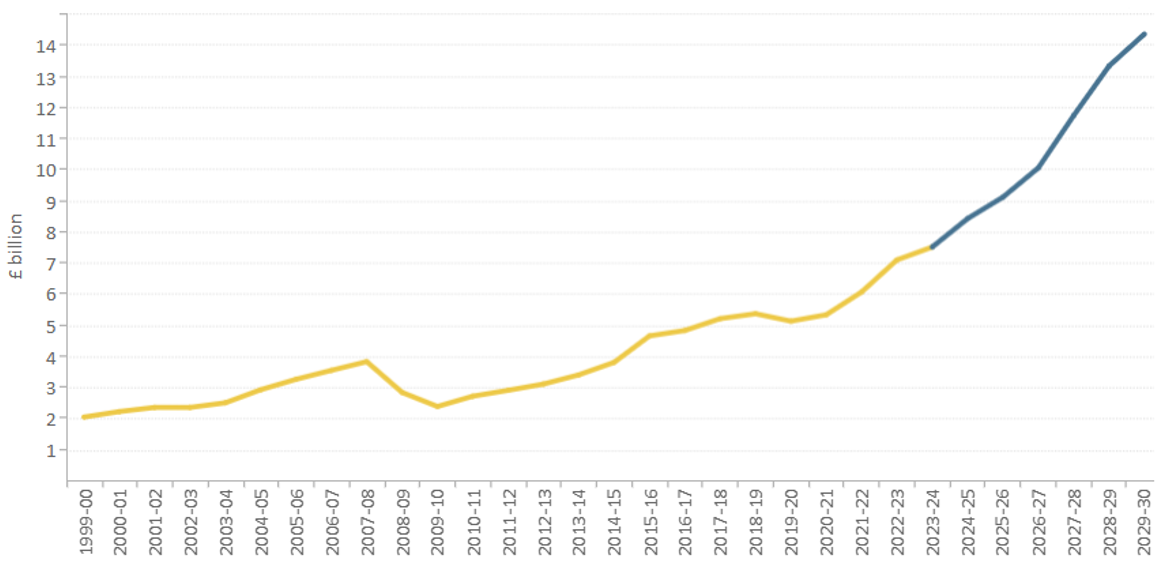
Source: OBR
Unused nil-rate bands can be passed to a spouse on first death, which means your partner could have an estate worth just short of £1 million and still have no IHT to pay. This might once have seemed like a significant sum, and you might not have given serious thought to estate and legacy planning.
As house prices and the cost of living have increased, however, more people are finding themselves liable for IHT, so be sure to review your estate plan now.
Get in touch
The chancellor’s Autumn Budget was light on increases to headline rates of tax, and yet it will still raise around £22 billion in tax. In a Budget that asks everyone to play their part, you could see your tax bill rise in the coming years, and that’s why long-term planning remains so important.
If you’re looking for an independent financial adviser in Milton Keynes or Olney, look no further. At Jane Smith Financial Planning, we’ve been helping clients for 30 years, so contact us at info@janesmithfinancial.com or call 01234 713131 to see what we can do for you.
Please note
This article is for general information only and does not constitute advice. The information is aimed at retail clients only.

 Production